A Bit Of Midnight Messy; Normal Grief Reactions And Our Bid To Make Them Neat

The world carries on but my son was burnt. The body I made in my body was taken and put into a fire and was eradicated from this world and I think these things as the fragmented thoughts lash my brain.
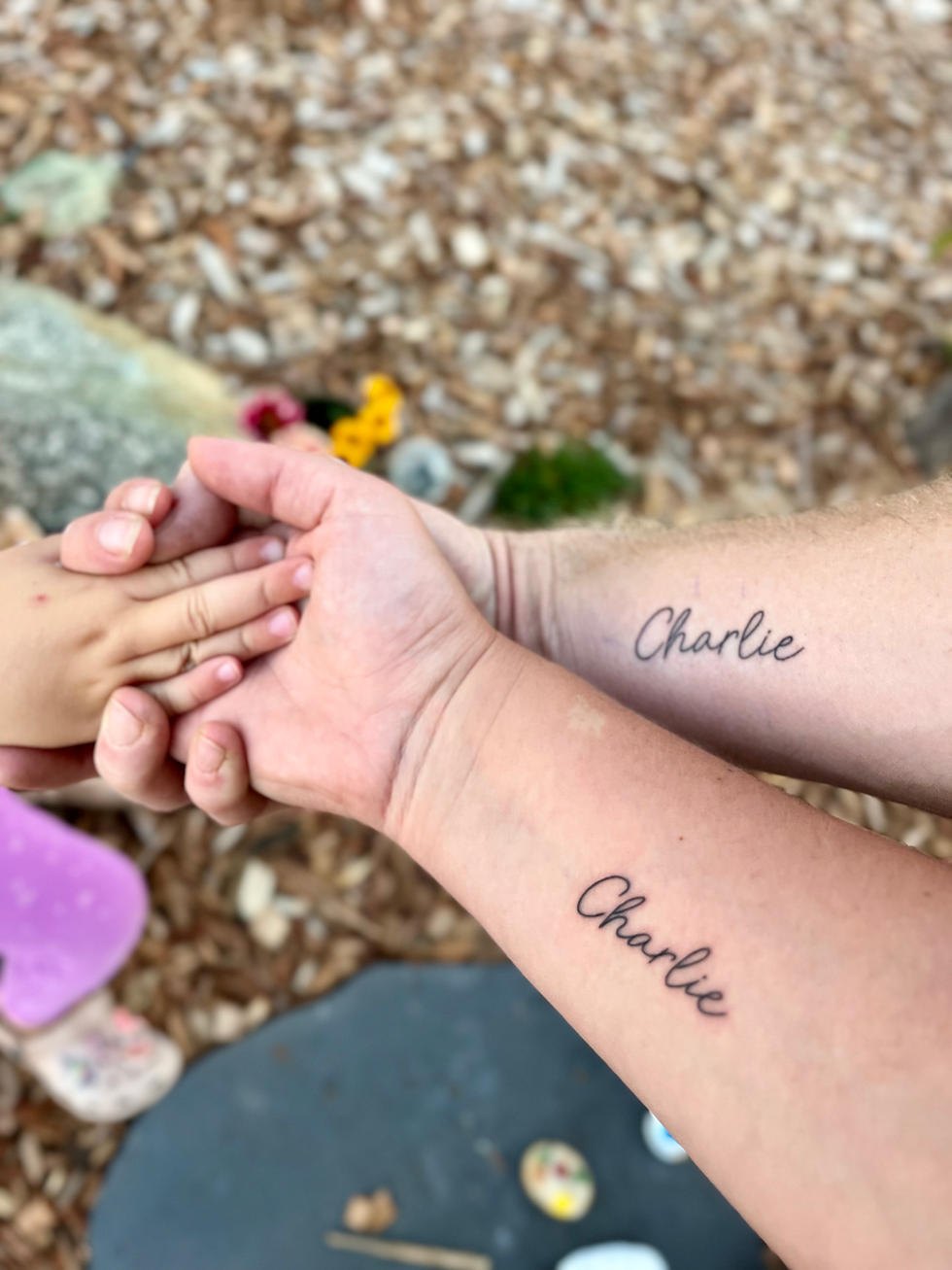
It's midnight. I'm in the spare bed where I've spent many nights since losing Charlie. Close proximity to another human seems too dangerous. I can't thrash about unnoticed. I might be touched, accidentally or purposefully in an attempt to connect but either way, it's dangerous to my body already under threat.
So I retreat to the darkness and allow my thoughts to run rampant. All hope of sleep gone, I turn to the only thing that can help me make sense of all this. Slowing the thoughts down a little, to address them one by one as the collisions slow enough to make it across the page.
I look out at the sky in desperation and notice the distinguishing quiet of the night blanket. When the world is seemingly at rest and all your thoughts feel lonelier as they reach out into the dark unnoticed. I noticed this same feeling, up late at night feeding Gracie when she was a baby. Only, then, I was comforted by the thought that I was not alone. That mums all over the world were doing the same thing. Yet, this time, I can't help but brewing on the fact that the pool of loss mums is significantly smaller. We are not alone but we are lonelier.
The thought that is burning through me and really wresting for control on this page is my slow dawning acknowledgement of a pattern that has been irking me for some time. The thing is, I've been noticing for awhile this trend, that I think is not a precise science but in my experience, has seemed true nonetheless. And the impact of it has appeared in the way I have been treated and perceived by broader family members and my husband.
Pathologising normal grief responses. I crave validation right now. I want to be seen. To be carefully considered. To feel safe and needed. I am told, 'you don't even know what you want,' as if I am inherently the problem. I'm told I create problems. That I have an issue with control. If I'm grieving a little too loud, a little too urgently, a little too uncontrollably, I'm not coping and perhaps I need to medicate to resume control. To settle down a little. It's ok if you're numb as long as you're coping. If I'm seeking control and I want involvement in decisions, I'm seen as a control freak with an inability to loosen control. I'm quite often made to feel 'too much' and inferences that I'm inherently wired incorrectly are made. My husband's psychologist told him that it was his fault he married an intelligent person. As if my struggle to navigate Charlie's death was a form of natural punishment for his decision.
People like grief to make sense. And for society, the traditional male grief narrative; a little more contained, reasoned, quiet, seems more appropriate. That's become our expectation of grief. It's ok if it's there as long as you're not too messy about it. As long as you know what you want. As long as you're following the timeline. As long as you can reassure people that you are not suicidal. That you are 'safe.' Otherwise, grief is too scary. So we pathologise it because to be able to label a certain reaction as 'too much' or 'too problematic' allows us to more easily deal with it.
And as the shadow of grief looms large and I fumble under the umbral space to find some sentiment of light and I trip and fall and grope frantically and blench and feebly reach out again, the idea that I might neatly be able to calmly stand and say, 'Oh, I know. I should use a torch,' sounds preposterous. And yet, this is sometimes what I feel I am expected to be able to do.
So allow me to luxuriate in self-pity for a moment. There was morning at 9am, the time nominated for Charlie's cremation, that I lay in bed and imagined his body being turned to ashes. There was a time that I told myself to just wait for the return of the lighthouse beacon in its cycle out to sea and back to land, in a bid of desperate survival. There was a time, I gripped my husband in terror one night, lying in bed thinking that I'd caused my son to be a quadriplegic. There was a time, I had to turn my back on my son, laying cold in his cot and put one step in front of the other as I walked away from his body forever.
So next time you expect a grieving person to be neat, to be contained, to not speak of the dead too loudly or assume they should be as they were, to only check to ensure they are not suicidal to put your own guilt to rest, to pathologise them if they seemed confused or unsafe in something they 'should know better in,' than maybe remember this blog post and proceed with gentleness. Being human is inherently messy. Being a human and grappling with a loss of life or a threatened loss that changes your whole identity in the blink of an eye is infinitely complex.
And here I am, already questioning whether I should post this. Whether I should wait until morning when perhaps I'll be a little more sane, maybe a little less possessed by the nighttime terrors that invade my brain. But that is me filtering how I project my grief when all I want, and many grievers that I've spoken to, is to be unfiltered. To howl if we need to. And for others to say, 'I'm ok with that. I'm right here. And if it's ok with you, I'll howl too.'
Anyway, if you're reading this, thank you for allowing my thoughts to be received even if it is unnoticed by me. And if you have felt like howling lately, I hope this post has made you feel a little less alone and a little more confident in allowing someone in to see your messy too.

header.all-comments